Nothing matched. Try “DTS”, “dates”, “apply” or “WhatsApp”.

Discipleship Bible School · DBS
Study the Word. Live it out.
ព្រះគម្ពីរ
Discipleship Bible School empowers those who have a heart to study the word of God.
Three months · sixty-six books
The whole Bible, one story.
Discipleship Bible School is a three-month secondary school designed to deepen your understanding of the Gospel and empower you to live out your faith with purpose.
In this thirteen-week introduction to the Bible, students read through the entire Bible, observe the chronology of biblical events, understand the historical context, and see how each book harmonises with the others.
You will inductively study all sixty-six books of the Bible during the three-month school.



- 01
Week 1
Worldview & Origins
Genesis · Exodus · Job
Follow the journey of the Israelites from Egypt to Mt. Sinai. Students place themselves in the narratives of Scripture.
We focus on the creation account in Genesis, compare the Biblical story with other ancient creation accounts, and study it in light of recent scientific discoveries and modern theories. The focus is on learning to ask relevant questions of the text, understanding the influence of worldviews, and discerning God's character and redemptive plan for humanity.
- 02
Week 2
Pentateuch
Leviticus · Numbers · Deuteronomy
Students explore Israel's journey from Mt. Sinai to the borders of the Promised Land, focusing on the tabernacle, the Mosaic covenant, and the significance of God's covenant throughout the Bible.
Emphasis is placed on personal commitment to Jesus and living a holy life, with discussions on the fear of the Lord and the concept of holiness from the book of Leviticus.
Students also learn the fulfilment of the law as outlined in Hebrews, and learn to discern the underlying Biblical principles in Old Testament laws. In Numbers they address the importance of faith and the danger of rebellion and unbelief.
- 03
Week 3
Tribal
Joshua · Judges · Ruth · Psalms
In Tribal Week, students journey alongside Israel as they conquer and settle in the Promised Land.
The focus shifts to personal victory, as students are encouraged to overcome their private battles and advance the Kingdom of God. Lessons from Israel's physical warfare translate to insights about spiritual warfare and victorious living. The contrast between societal disobedience in Judges and individual faithfulness in Ruth underscores the importance of personal commitment.
An introduction to Hebrew poetry and the Psalms deepens students' understanding of God's plan for their lives, encouraging them to embrace their destiny and find their role within the community. Students also begin meditating on God's Word as a foundation for their spiritual growth.
- 04
Week 4
David
1 Samuel · 2 Samuel · 1 Chronicles · Proverbs · Ecclesiastes · Song of Songs
Week 4 shifts focus to Samuel, a pivotal figure who led Israel from a tribal federation to a monarchy under King Saul and King David. Special emphasis is placed on the life of David — his character, experiences, sins, achievements, and his relationship with God and others.
The study also delves into the Wisdom literature of Proverbs, Ecclesiastes and Song of Songs, teaching students how to read and apply godly wisdom in their lives. Students learn how to lead inductive Bible studies and are encouraged to reflect godly leadership principles in their small groups and their personal lifestyle.
- 05
Week 5
Kings
1 Kings · 2 Kings · 2 Chronicles
We continue the theme of leadership, beginning with the life of King Solomon and the division of the kingdom into Israel in the north and Judah in the south. Background is given on the Assyrian, Babylonian and Persian empires, with archaeological insights and an overview of the kings of Israel and Judah.
Emphasis is placed on key kings, both good and bad, and the political, religious and social contexts of their reigns. The lives of Elijah and Elisha introduce the prophetic ministry and its significance in Israel's history. We explain the differing emphasis between Chronicles and Kings, and discuss the reformations in Israel's history and their relevance to revival in the present generation. Reflecting on the legacies of these leaders, students consider whether their personal values align with biblical principles and what their life choices imply.
- 06
Week 6
Early Prophets
Amos · Hosea · Micah · Joel · Isaiah · Jonah · Nahum
The book of Kings provides the historical backdrop for the Prophetic Books. With an understanding of the political, religious and social conditions in Israel, students can now dive into the messages of the prophets.
The goal is for students to be able to interpret prophetic literature and find assurance in God's faithfulness, His engagement in history, the fulfilment of prophecy, and His sovereignty over future events.
While the prophets often warn of judgment based on past covenants, students also discover messages of restoration and hope, some pointing to the coming of the Messiah. Through Amos and Hosea, students encounter themes of social justice, God's compassion, calls to mercy, the coming of the Spirit, missions to the Gentiles, and the anticipation of Jesus' ministry.
- 07
Week 7
Late Prophets
Zephaniah · Habakkuk · Jeremiah · Lamentations · Ezekiel · Daniel · Obadiah
The study of the prophets continues, set within the historical framework of Israel's history from the book of Kings.
We cover the Day of the Lord in Zephaniah, Habakkuk's intercession, and Israel's pre-deportation and exile periods. We look at the consequences of God removing His protection in Ezekiel and the promise of the New Covenant in Jeremiah.
Students reflect on the prophets' commitment to God's call and on their own callings. Despite adversity, the example of Daniel shows God's sovereignty and the ability to remain faithful in any environment.
- 08
Week 8
Post-Exilic & Inter-Testament
Esther · Ezra · Nehemiah · Haggai · Malachi · Zechariah
This week concludes the Old Testament with the return from exile and the rebuilding of Jerusalem.
We also explore the historical transitions between the Old and New Testaments, from Persian to Greek to Roman rule, providing the context for Jesus' birth. Themes include God's restoration in Ezra, leadership principles in Nehemiah, realignment with God's will in Haggai, and practices like fasting and tithing in Zechariah and Malachi.
- 09
Week 9
Jesus
Matthew · Mark · Luke
After eight weeks, we dive into the life and ministry of Jesus — the pivotal moment in history, His death and resurrection.
The arrival of the New Covenant fulfils Old Testament prophecy, activating God's redemptive plan and ushering in the Kingdom of God. We explore how these prophecies are fulfilled in Jesus through the Gospel of Matthew, compare the synoptic accounts, and learn to interpret the parables.
Students are challenged by Jesus' teachings, including the Sermon on the Mount and His predictions about the destruction of the Temple and His second coming.
- 10
Week 10
Church
Acts · James · 1 Peter · 2 Peter · Jude · Hebrews
Jesus sends out His disciples, launching the birth of the Church and the Holy Spirit's role in its growth.
Students learn the key events of the early Church — Pentecost, Paul's conversion, the Jerusalem Council and Paul's journeys. An introduction to the epistles as a new literary form helps students understand their historical context from Acts.
Hebrews emphasises the superiority of the New Covenant and encourages perseverance. James teaches practical faith, 1 Peter endurance in adversity, and 2 Peter and Jude discernment against false teachers.
- 11
Week 11
Paul
Philippians · 1 Corinthians · 2 Corinthians · Romans · Galatians · Ephesians · Colossians · Philemon · 1 Thessalonians · 2 Thessalonians · 1 Timothy · 2 Timothy · Titus
Having followed Paul's conversion and missionary journeys in Acts, students turn to his epistles and gain an appreciation of his influence on the early Church. They revisit his journeys and read his letters to the churches in the order he planted them.
Each letter's themes, main ideas, reasons for writing and specific church problems are explored. Discipleship topics include justification and grace (Galatians), humility and joy (Philippians), godly living and awaiting the Lord's return (1 & 2 Thessalonians), unconditional love, the Holy Spirit and God's power (1 & 2 Corinthians), condemnation, salvation, sanctification and relationships (Romans), unity, identity and spiritual warfare (Ephesians), and pastoral care (1 Timothy, Titus).
- 12
Week 12
John
John · 1 John · 2 John · 3 John · Revelation
In the final week of reading, we explore the life of John and his writings, focusing on his perspective, style and key themes.
We look at the prevalent themes of the Johannine writings, particularly the role of the Holy Spirit, to deepen students' awareness of the Spirit's presence in their lives. We discuss early Gnosticism and its influence on John's Gospel, connecting it to modern thinking.
Students are introduced to apocalyptic literature, gaining insight into the Book of Revelation and the various schools of interpretation. Discussions on the Second Coming conclude the reading.
- 13
Week 13
Teaching Week
Final presentation
Students apply what they have learned over the twelve weeks by giving a final presentation of the Bible — from beginning to end.
DBS information
- Next school
- June 2027
- Length
- 13 weeks
- Arrival day
- June 28, 2027
- Departure day
- September 22, 2027
- Location
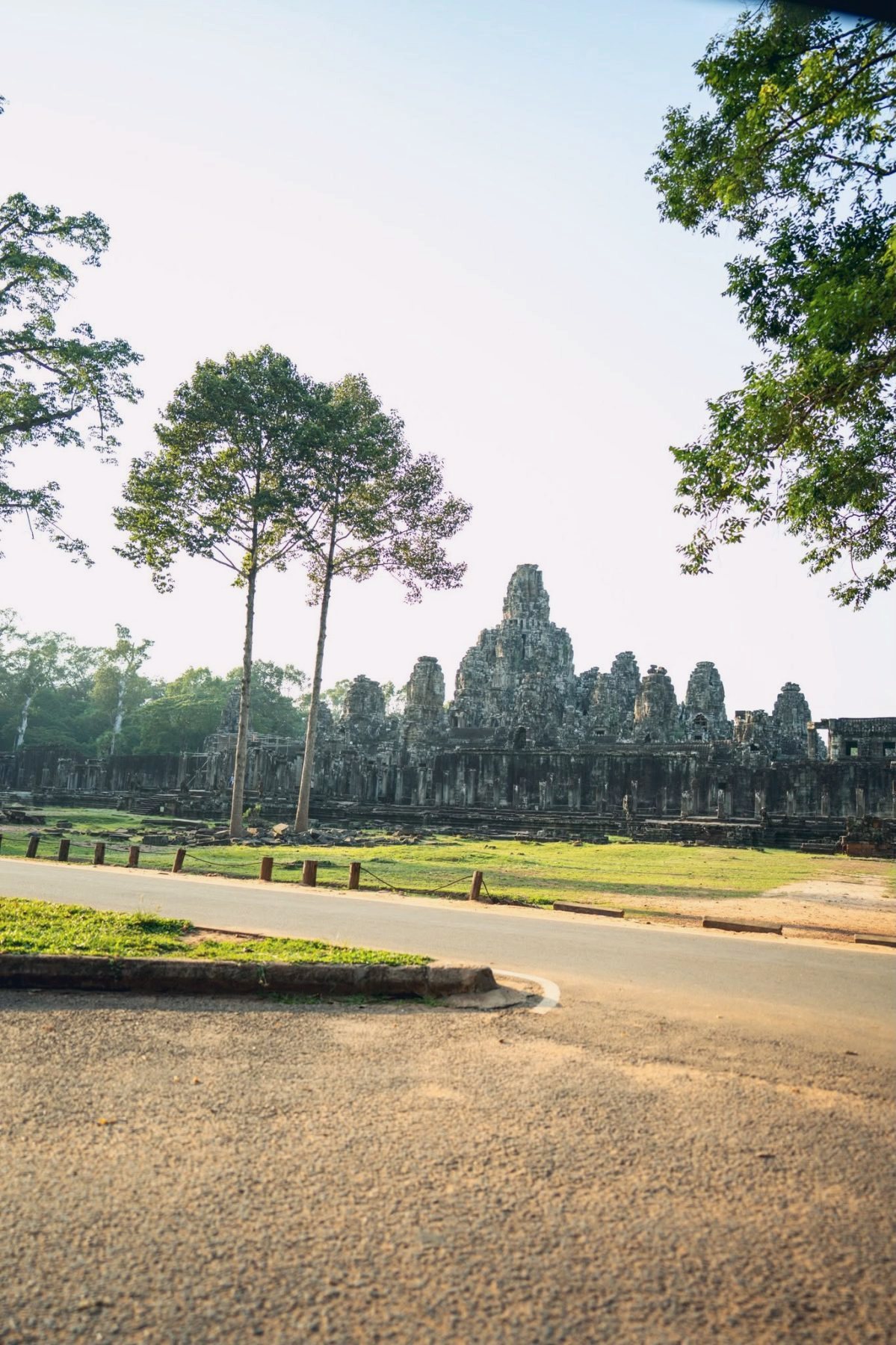
- Siem Reap, Cambodia
- School leader
- To be announced
- Prerequisites
- Must have completed a DTS
- info@ywamsiemreap.org
Cost of the school
Lecture phase · 13 weeks
- Country A
- $2,000 USD
- Country B
- $1,500 USD
- Country C
- $620 USD
Flights and additional transportation are not included.
Not sure which country band you fall under? Email us and we will tell you.

FAQ
Questions about DBS
Who is DBS for?
Anyone who has completed a DTS and has a heart to study the Word of God. You do not need to be a teacher or a scholar — you need hunger and thirteen weeks.
Do we really read the whole Bible?
Yes. Over thirteen weeks students read all sixty-six books, following the chronology of biblical events so the story holds together from Genesis to Revelation.
What does "inductive" study mean?
Instead of starting with what others say about a passage, you start with the text itself: observe what it says, interpret what it meant to its first readers, then apply it. You learn a method you can use for the rest of your life.
What does a week look like?
Each week centres on a set of books. There is teaching on their history and context, a lot of personal reading, small-group discussion, and students take turns leading inductive studies.
What happens in the final week?
Teaching Week. Each student presents the whole Bible, beginning to end, to the school — the proof that the story has become their own.
What does it cost?
The school fee depends on your passport country: $2,000 USD for Country A, $1,500 USD for Country B and $620 USD for Country C. Flights and additional transportation are not included. Email us and we will tell you which country band applies to you.
Know the whole story.
The next DBS runs June 28 to September 22, 2027 in Siem Reap. Tell us a little about yourself and we will walk you through the dates, the cost and what to expect.